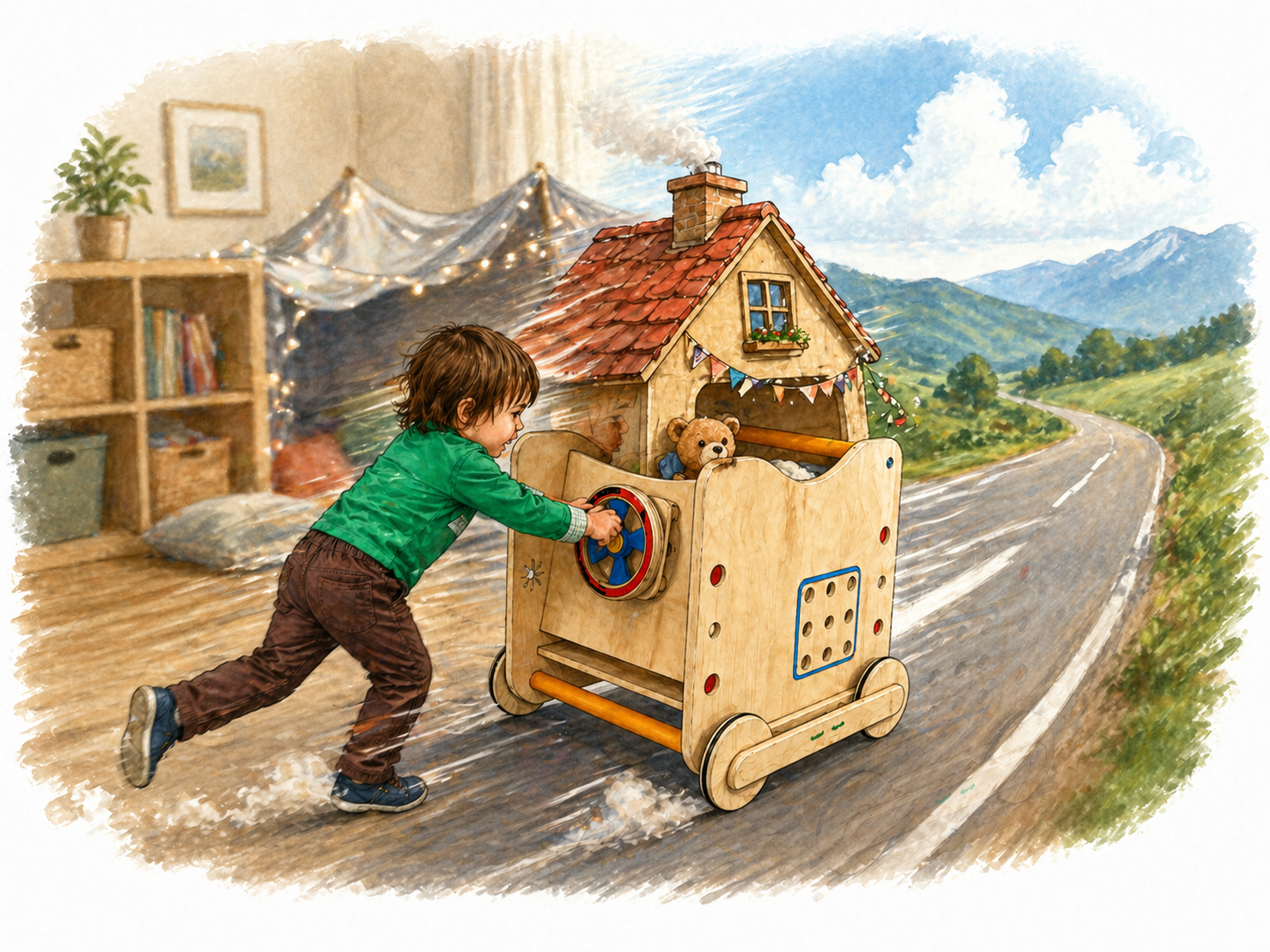
Childhood play is rapidly changing in today’s digital age, as screens replace the slow, imaginative, and hands-on play that once defined early development.
This thesis explores how well designed toy systems can support child develpment, attention span and parent child connection.
By examining child psychology and the role of play in early development, this project aims to design a new toy sytem that serve as a tool for play.

Roll Play
William Waris
Importance of Play
•Longer attention span and deeper focus
•Strong creativity and flexible thinking
•Greater independence and confidence
•Stronger motor skills and coordination
•Development of competence and identity
•Through play especially real tasks, kids build a sense of “I can do things that matter.”
•This forms confidence, independence, and a lasting internal drive
The Problem
•Parents are increasingly busy, and play suffers
•Technology becomes a default “babysitter”
•Unstructured time shifts from exploration to consumption
•Play becomes about being entertained, not participating
•Less parent-child interaction
•Parents don’t understand importance of play
•Parents don't know how to initiate play
Goal
For the first time in recent history, progress in cognitive development across generations appears to be stalling. Roll Play serves as a consistent vessel to address this gap by making development a part of everyday life.
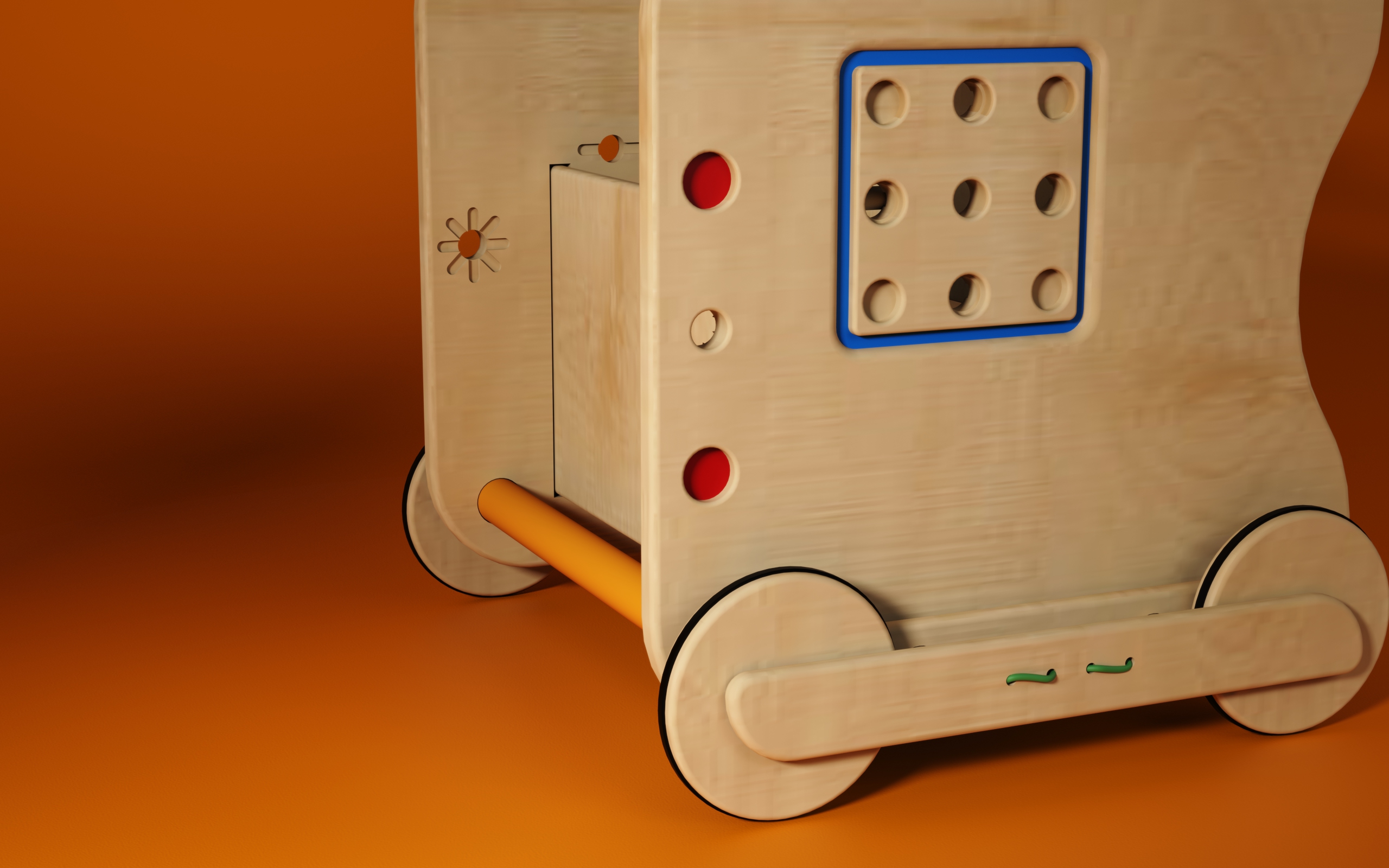
Overview
.png)
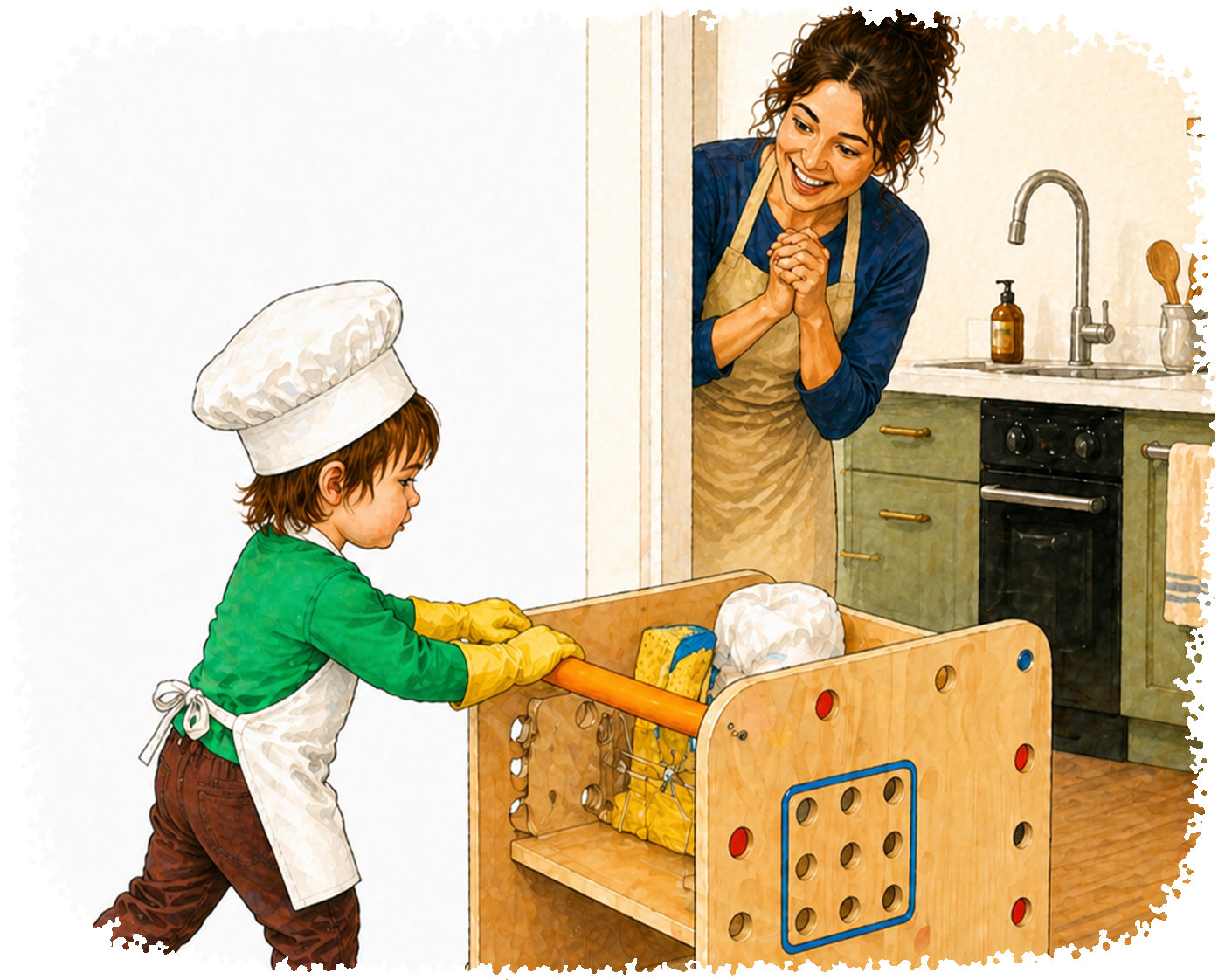
Role Play
By using interchangeable attachments for both real tasks and play, the system creates activities that naturally invite you into, childrens world of play
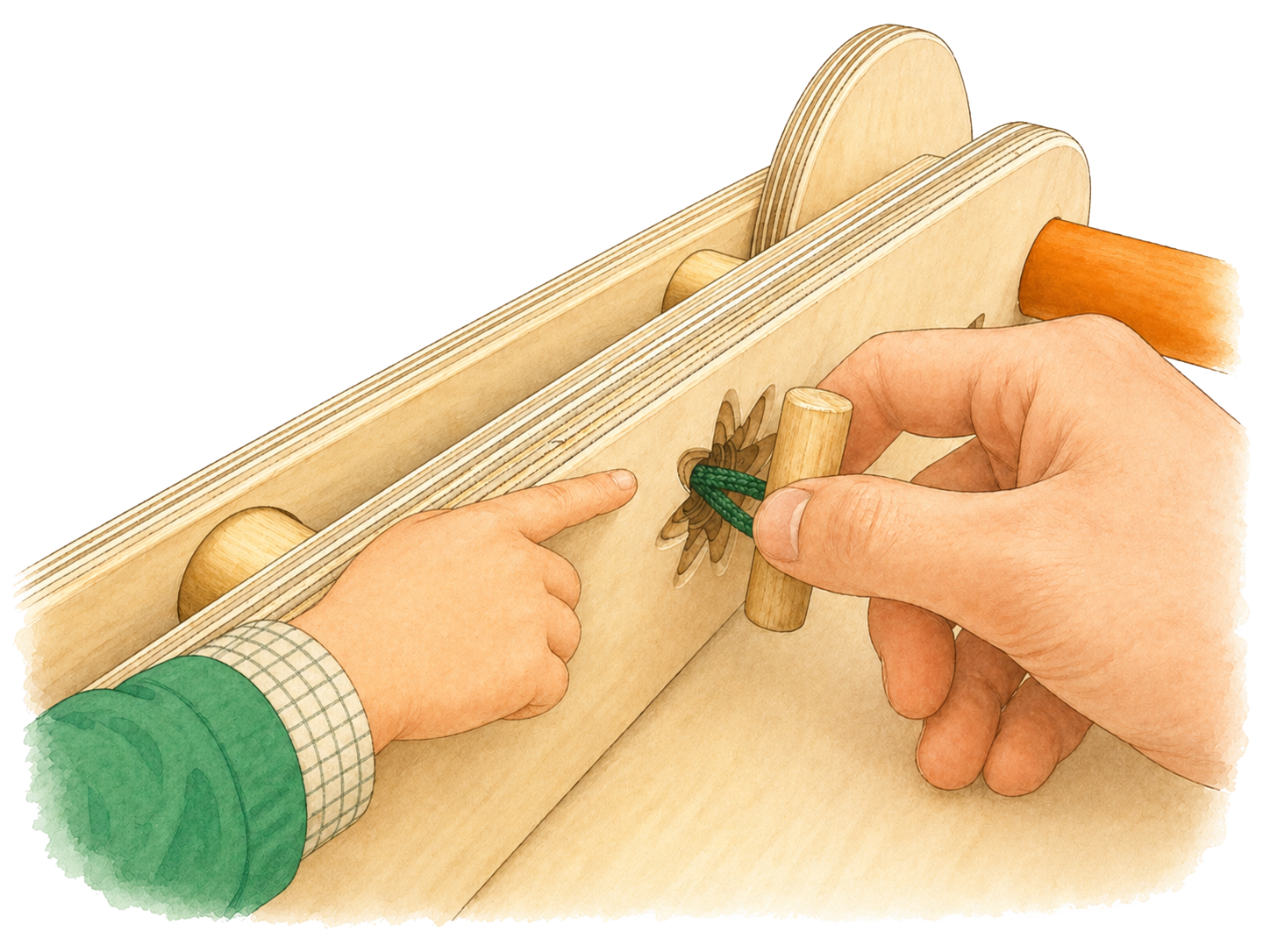
Twist n’ Play
Twist n’ Play is a fun, puzzle like system for attaching new accessories to Roll Play, helping children learn motor skills and connections.